




If you are confused between Yoga Mat vs Pilates Mat vs Exercise Mat: Which One Should You Choose, this article will help you out.
Fitness mats look similar on the surface, rolled up in colorful stacks but the differences actually matter more than you think. Using the wrong mat for your workout is not just uncomfortable, it can affect how effective your practice is and how your joints feel afterward.
What Is a Yoga Mat?
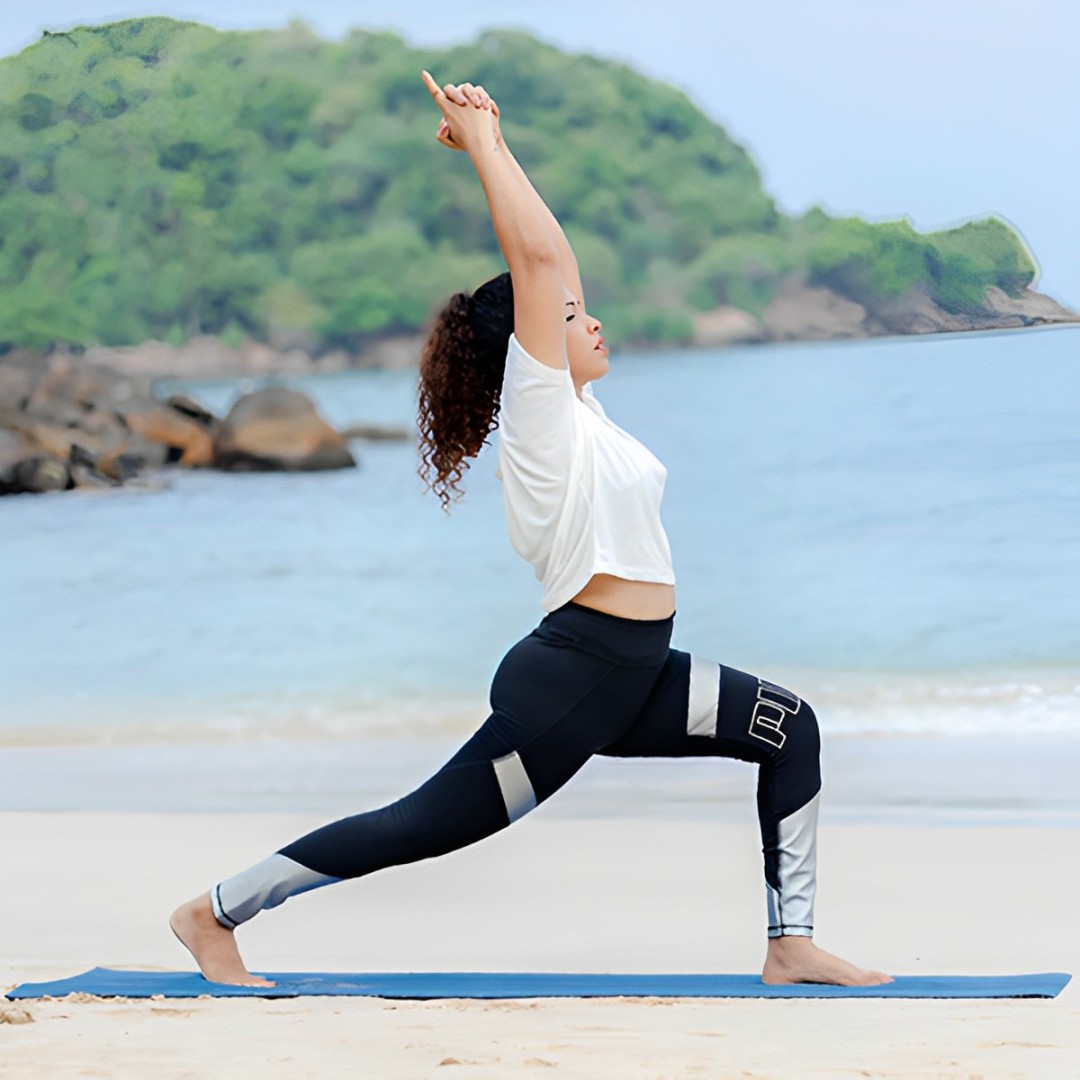
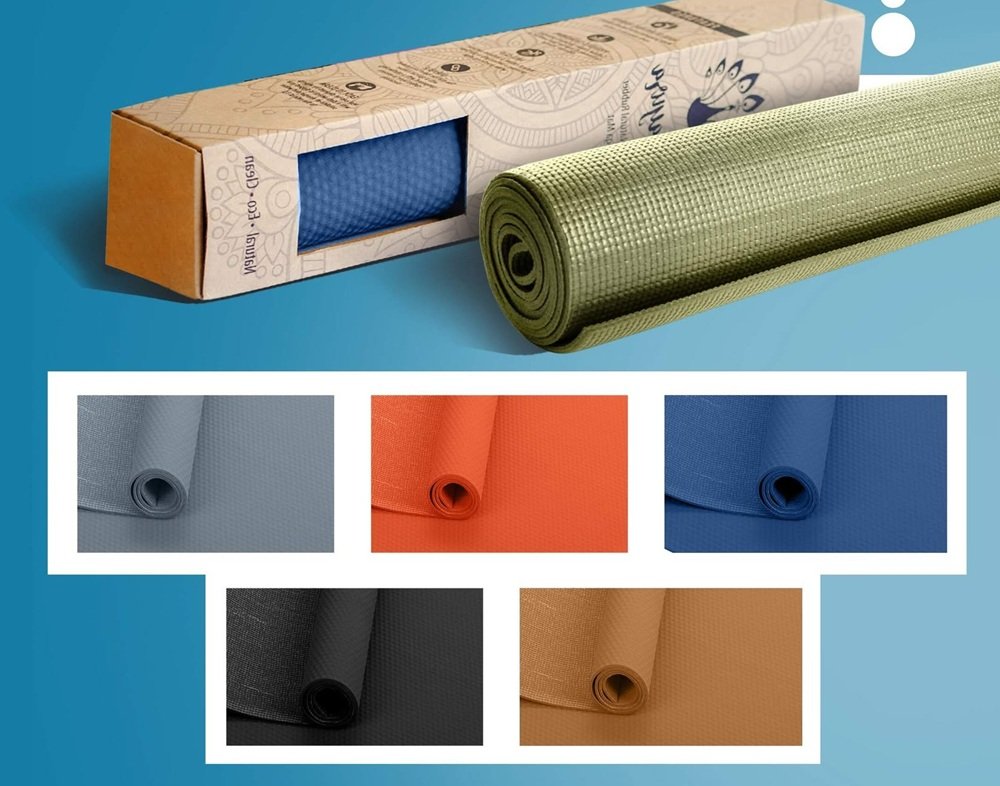
A yoga mat is specifically designed for yoga practice. So, it’s thin, usually between 1.5 to 3 mm thick. The whole point is finding the balance between protection and connection. You want enough cushioning to protect your joints during repetitive poses and transitions, but thin enough that you feel the floor underneath you. That grounding sensation matters for balance work and for building stability in your practice.
Most yoga mats are made from PVC, natural rubber, or TPE, materials chosen for their balance of grip, durability, and comfort. A good yoga mat has enough surface texture to keep you from sliding around during downward dog or warrior poses, especially when you are sweating.
Advantages of Yoga Mats
Yoga mats are engineered specifically for what you are doing. When you are balancing on one leg, you actually feel more connected to the ground and can make micro-adjustments in your posture as you deepen your practice.
They are also genuinely portable. A yoga mat becomes part of your routine rather than equipment you have to think about carrying. Good yoga mats absorb impact without being too spongy, which keeps your joints aligned.
What Is a Pilates Mat?
A pilates mat is thicker and denser than a yoga mat, usually around 5 to 7 mm thick. That extra cushioning is not random, it is intentional. Pilates involves a lot of movements done directly on your back, your glutes, your elbows, and your spine.
Pilates mats are mostly made from closed-cell foam, which resists sweat and moisture much better than the porous materials used in yoga mats. The surface is usually less grippy than a yoga mat because pilates doesn’t require the same level of balance or weight transfer.
Advantages of Pilates Mats
The extra thickness is genuinely protective, especially if you are new to pilates or dealing with lower back sensitivity. When your spine is in contact with the mat during exercises, that cushioning makes a real difference in comfort and safety.
The stability is another major advantage. In pilates, precision is everything. A properly thick mat helps you focus on form and control rather than stabilizing yourself. Closed-cell foam construction also makes pilates mats water-resistant and durable long-term.
Disadvantages of Pilates Mats
The thickness that protects you also makes it bulky and heavy. It does not roll up compactly, and it is usually more expensive than exercise mats. If your routine is not purely pilates, investing in a dedicated pilates mat might feel too much.
What Is an Exercise Mat?
An exercise mat is the generalist of the mat world. It’s usually between 2 to 4 mm thick. It is designed to handle HIIT workouts, stretching, core work, and floor exercises. These mats are more affordable because they are made with straightforward materials and are not engineered for a specific practice.
Advantages of Exercise Mats
The biggest advantage is versatility. If you are doing bodyweight exercises, planks, core work, and stretching all in the same week, an exercise mat handles it all. You are not locked into one practice, so you have freedom to change your routine based on what you need that day.
They are also more affordable, which matters if you are budget-conscious or still figuring out what type of exercise you want to commit to. Exercise mats are easier to clean than yoga mats and lighter than pilates mats, making them practical if you occasionally move your mat around.
Disadvantages of Exercise Mats
If you are serious about yoga, you will notice an exercise mat does not give you the grip or specific feel you want. If you are into pilates, the cushioning profile won’t be quite right for the work you are doing.
They also don’t last quite as long as purpose-built mats because they are not engineered with the same level of precision or material quality.
Yoga Mat vs Pilates Mat vs Exercise Mat – Detailed Comparison
- Thickness and Cushioning: Yoga mats excel at thinness and ground connection. Pilates mats win on protective cushioning. Exercise mats sit in the middle. If joint protection is your priority, go pilates. If you need to feel grounded, choose yoga.
- Grip and Stability: Yoga mats are designed for balancing. Pilates mats have less grip because movements are stationary. Exercise mats have moderate grip. For flowing movements, yoga mats work best.
- Portability: Yoga mats win here by far, they roll up small and light. Pilates mats are bulky. Exercise mats fall in the middle.
- Price: Exercise mats are cheapest, yoga moderate, pilates pricier. The right mat for your practice is worth the investment.
Best For:
- Yoga: Purpose-built for this practice specifically.
- Pilates: Protective and stable for precise movements.
- Mixed Fitness: Versatile if you rotate workouts.
The honest answer: it depends on what you are actually doing. The right mat makes your practice better.
Why choose The brand Hub
The Brand Hub is just selling mats. We understand that the right equipment actually matters to your practice. We stock yoga mats that give you the feel and grip you need for a solid practice, pilates mats that protect your spine while you build strength, and exercise mats for people who want flexibility in their routine.
Yoga Mat vs Pilates Mat vs Exercise Mat: Which One Should You Choose can be confusing. But The Brand Hub offers the best mats depending on your need. So, without compromising on quality, you get the best. We have tested these mats ourselves, which is how we know the difference between what sounds good in a description and what actually works when you are mid-workout. Your practice deserves equipment that supports it properly. Let’s find the right mat for you.

Editorial Staff’s at The Brand Hub are experts in Sri Lanka fashion.


